
WELCOME BONUS 300%
UP TO €1100 + 300
FREE SPINS
UP TO €1100 + 300
FREE SPINS
Home → Blackjack
Blackjack at Wolfy Casino: Variants, Rules and Payouts
Chose Wrong Table for 5 EUR Bankroll
Selecting a table with 6:5 Blackjack payouts drastically alters the financial outcome for any player starting with a modest 5 EUR bankroll. The house edge jumps to 1.85%, which is significantly higher than the 0.28% found in Liberal Vegas Strip games, making losses much faster. This means your initial stake evaporates quickly compared to tables offering standard 3:2 payouts where the RTP remains near 99.72%. A single losing hand reduces your capital by 20%, whereas better rules preserve more funds for extended play.
The difference between a 3:2 and a 6:5 payout is exactly 1.39 percentage points added to the casino's advantage in these specific variants. For every 100 EUR wagered on a 6:5 table, the house retains 1.85 EUR, while a 3:2 table only keeps 0.46 EUR. This mathematical disparity forces players with small budgets to avoid these specific game rules entirely if they wish to maintain their balance longer. The choice of table directly dictates the speed at which a small bankroll is depleted during typical gameplay sessions.
Game providers like Evolution offer Infinite Blackjack with a 99.47% RTP, providing a safer environment for low-stakes players than standard web-based versions. However, even here, the minimum bet might exceed the comfort zone of someone strictly managing a 5 EUR stack. Players must verify that the table limits align with their total available funds before placing any chips. Choosing a high-limit table with poor rules ensures rapid failure regardless of skill level or strategy application.
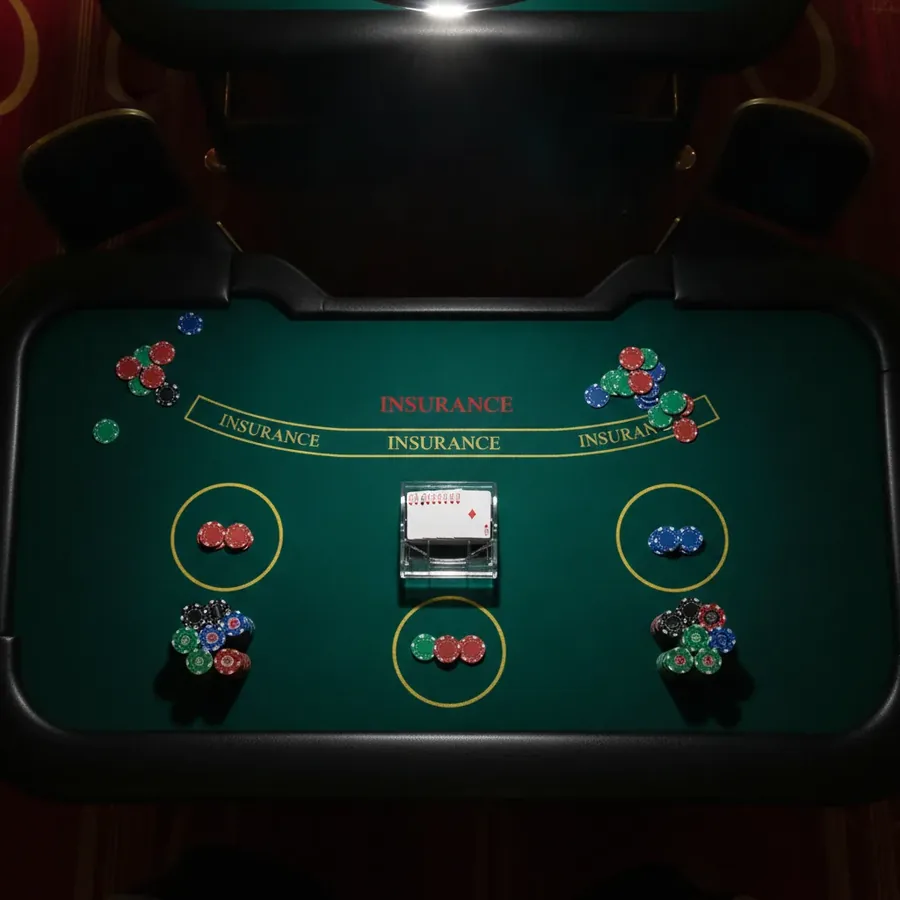
Infinite Blackjack vs Classic Seven-Seat Table
Infinite Blackjack allows an unlimited number of players to join the same virtual seat simultaneously, unlike classic tables restricted to seven distinct positions. This format, offered by Evolution, supports bets ranging from 1 EUR up to 5,000 EUR, accommodating both casual and high-roller preferences efficiently. The RTP stands at 99.47%, which is slightly lower than the 99.56% found in Lightning Blackjack but still highly competitive for serious strategists. This structure maximizes table utilization without compromising the integrity of the card shoe or dealing speed.
Classic seven-seat tables often enforce stricter betting limits and slower dealing times due to the physical constraint of human interaction or fixed software slots. In contrast, the infinite model removes these bottlenecks, allowing continuous action regardless of how many participants are currently active at the virtual desk. The ability to place side bets like Any Pair or Bust It adds layers of complexity absent in basic seven-seat configurations. Consequently, players seeking volume and variety will find the infinite model more suitable for sustained engagement over long periods.
The maximum bet cap of 5,000 EUR in Infinite Blackjack provides ample room for advanced strategies such as progressive martingale systems, which are impossible on low-limit classic tables. Meanwhile, Lightning Blackjack offers multipliers up to 25x, introducing volatility that classic seven-seat formats rarely match in their standard iterations. Understanding these structural differences helps players choose the right environment for their risk tolerance and bankroll management goals. The choice ultimately depends on whether one prioritizes speed and capacity or traditional pacing and limited seating options.
Insurance Pays 2:1 Yet Still Costs Money
Insurance bets pay out at 2:1 when the dealer reveals an Ace, but this side wager carries a steep house edge of 7.47% over six to eight decks. This negative expectation makes it a costly addition to your main hand unless you possess specialized skills like card counting techniques. Even though the immediate payout seems attractive, the long-term statistical loss exceeds the potential gain from occasional successful insurance calls. Rational players should generally decline this option to preserve their overall return rate across multiple hands played consecutively.
The theoretical return to player (RTP) for insurance is merely 92.53%, indicating that for every 100 EUR wagered, the casino expects to keep nearly 8 EUR permanently. This figure is substantially worse than the base game RTP of 99.54% or even the 98.15% seen in certain 6-deck variants without insurance options. Accepting insurance effectively lowers your average return per hour, turning a potentially profitable session into a guaranteed drain on your resources over time. Avoiding this side bet is crucial for maintaining optimal financial performance during extended blackjack sessions.
Card counters may accept insurance when the true count reaches +3 or higher, as this shifts the odds slightly in their favor against the house. For the vast majority of recreational players, however, the basis strategy dictates always rejecting insurance because the probability of the dealer having a ten-value card is insufficient to justify the risk. The cost of accepting insurance frequently outweighs the benefit, especially given the high variance associated with this specific type of secondary wager. Stick to basic strategy decisions to minimize losses and maximize the longevity of your gaming budget effectively.
Bonus conditions often exclude Blackjack completely
Welcome bonuses such as the 300% offer up to 2,000 EUR typically assign only a 10% contribution rate to table games like blackjack compared to 100% for slots. This means that for every 100 EUR wagered on blackjack, only 10 EUR counts toward clearing the wagering requirements attached to the promotional funds. Players attempting to meet these obligations through table games will find themselves facing significantly higher turnover targets than those playing eligible slot titles exclusively. This discrepancy creates a substantial barrier for bonus hunters who prefer strategic card games over random number generator spins.
The high wagering multiplier combined with the low contribution percentage makes clearing a bonus via blackjack mathematically inefficient and financially risky. If a player wagers 500 EUR on blackjack, they have only contributed 50 EUR toward the requirement, leaving 450 EUR still pending clearance. This slow progress increases exposure to the house edge, which averages around 0.46% to 1.85% depending on the specific rules selected. Consequently, most experienced users avoid using bonus funds on tables where the conversion rate severely penalizes their betting activity.
Some casinos explicitly exclude blackjack entirely from bonus eligibility, forcing players to choose between free credit and their preferred gaming format. Without clear exclusion, the 10% contribution rule acts as a de facto penalty, discouraging table game usage during the promotional period. Players must carefully read terms to determine if their chosen variant, such as Infinite Blackjack or Lightning Blackjack, falls under these restrictive categories. Failing to account for these conditions can result in forfeited winnings after attempting to withdraw funds earned through ineligible gameplay activities.
Soft 17: Dealer Hits or Stands
When the dealer hits on soft 17, the house edge increases by approximately 0.22 percentage points compared to scenarios where the dealer stands on that same hand. This rule change negatively impacts the player's expected return, reducing the overall RTP from potentially 99.72% down to lower thresholds depending on other modifiers. Games featuring H17 (Hit Soft 17) require more aggressive player strategies to mitigate the additional disadvantage imposed by the dealer's mandatory hit action. Understanding this distinction is vital for selecting tables that offer the most favorable mathematical conditions for long-term play.
Conversely, dealers standing on soft 17 (S17) represent one of the most beneficial rules for players, helping to achieve the lowest possible house edge of 0.15% in single-deck variations. This favorable condition often appears alongside other player-friendly rules like Double After Split (DAS), which further improves the RTP by about 0.14 percentage points. Tables combining S17 with DAS and Resplit Aces provide the strongest foundation for basic strategy execution, minimizing losses over thousands of hands dealt. Players should prioritize these configurations whenever available to maximize their chances of retaining their bankroll during extended sessions.
The impact of hitting versus standing on soft 17 is comparable to the difference between 3:2 and 6:5 blackjack payouts in terms of strategic importance. While the latter adds 1.39% to the house edge, the former adds only 0.22%, yet both significantly alter optimal decision-making processes. Advanced players adjust their doubling and splitting frequencies based on whether the dealer must hit soft 17, altering the fundamental approach to each hand. Ignoring this rule variation leads to suboptimal plays that gradually erode profits, making rule awareness a critical component of successful blackjack strategy.
Blackjack variants at a glance
| Variant | Payout | House edge | Rule | Bet range |
|---|---|---|---|---|
| Blackjack 6 Decks, S17, DAS, DOA, Auszahlung 3:2, Basisstrategie | 99.54% | 0.46% | Dealer steht auf Soft 17; Verdopplung auf jeder Zweierkarte; Verdopplung nach Split erlaubt; keine Aufgabe. Basisstrategie ist für diesen Wert zwingend | Blackjack 3:2, normaler Gewinn 1:1, Insurance 2:1 |
| Blackjack Ein Deck, klassische Regeln, 3:2 | 99.85% | 0.15% | Weniger Decks = niedrigerer Vorteil; ein Deck gibt ca. −0.48 Prozentpunkte gegenüber 8 Decks. Oft durch 6:5 Auszahlung kompensiert. | Blackjack 3:2, Gewinn 1:1 |
| Blackjack Surrender (Late Surrender) – Regel-Effekt | n.a. (Regel-Modifikator) | −0.08 Prozentpunkte | Spieler gibt Hand nach Dealer-Blackjack-Prüfung auf, verliert die Hälfte des Einsatzes. Verbessert RTP um ca. 0.08 Prozentpunkte. Early Surrender ist wesentlich wertvoller (bis −0.6 Prozentpunkte), aber extrem selten. | Rückzahlung 50% des Einsatzes |
| Blackjack Insurance / Versicherung (6–8 Decks) | 92.53% | 7.47% | Separate Nebenwette bis 50% der Hauptwette, wenn der Dealer ein Ass hat. Basisstrategie schreibt IMMER Ablehnung vor (außer Karten zählen bei True Count ≥ +3). Bei einem Deck Vorteil ≈ 5.88% | Insurance 2:1 |
| Blackjack Liberal Vegas Strip (liberale Regeln, 3:2) | 99.72% | 0.28% | Günstigste Regelkombination: S17 + DAS + Resplit + Late Surrender. Standardabweichung 1,15 | Blackjack 3:2, Gewinn 1:1 |
| Blackjack Split / Double / H17 – Regel-Effekte | n.a. (Regel-Modifikatoren) | H17 +0.22 Prozentpunkte; RSA −0.08 Prozentpunkte; DAS −0.14 Prozentpunkte | Dealer Hits Soft 17 verschlechtert RTP um 0.22 Prozentpunkte; Resplit Aces verbessert um 0.08 Prozentpunkte; Double After Split verbessert um ca. 0.14 Prozentpunkte; 6 Decks statt 8 – ca. 0.02 Prozentpunkte. | Double – Einsatz ×2 mit einer Karte; Split – bis 4 Hände; Ass-Split meist mit einer Karte. |
Side Bets don't count towards bonus turnover
Lightning Blackjack by Evolution offers multipliers up to 25x on winning hands, yet these side bets are excluded from the 30 percent table game contribution rate. Players wagering €10 per hand generate zero progress toward the 300% welcome bonus turnover requirement when selecting Lightning options. This exclusion forces a choice between high-variance side wagers and standard gameplay that actually accumulates bonus credits.
Infinite Blackjack allows four distinct side bets including Any Pair, 21+3, Hot 3, and Bust It, all of which fail to contribute to the mandatory wagering volume. While the base game RTP stands at 99.47%, adding any of these specific side wagers removes that portion of the bet from the calculation entirely. Consequently, a €100 deposit yields only €2,000 in bonus funds usable on slots or eligible blackjack rounds without side features.
Insurance is a separate side bet paying 2:1 when the dealer shows an Ace, but it carries a steep house edge of 7.47% and contributes nothing to bonus turnover. Accepting insurance reduces long-term return significantly while simultaneously halting progress on the required wagering multiplier for the welcome offer. Players seeking to clear the bonus must strictly avoid this optional wager to maintain mathematical efficiency in their conversion strategy.
Which table limits suit 20 EUR balance?
Blackjack Party by Evolution sets a minimum stake of €1.00, allowing a €20 bankroll to sustain approximately twenty initial hands before ruin. This lower entry point provides more decision-making opportunities compared to Infinite Blackjack, which demands a €1.00 minimum but permits plays up to €5,000. The modest ceiling ensures that players with limited funds can engage with the two-moderator atmosphere without immediate financial depletion.
Lightning Blackjack requires a minimum bet of €1.00, matching the entry threshold of other tables while offering potential payouts via lightning multipliers. With a €20 balance, a player can endure roughly twenty rounds at the lowest stake level, though volatility increases due to the optional multiplier mechanics. The maximum limit of €2,500 remains irrelevant for small balances, making the floor price the primary constraint for session length.
Standard blackjack variants often feature higher minimums than the €1.00 floor seen in live dealer games, potentially exhausting a €20 balance faster. For instance, some proprietary tables might require €5.00 per hand, limiting a €20 bankroll to only four initial decisions. Comparing the €1.00 minimum across Evolution titles reveals they are the most suitable options for preserving capital during early gameplay stages.
Blackjack doesn't count for every bonus offer
The 300% welcome bonus up to €2,000 applies broadly, but table games like blackjack contribute only 10 percent toward the total wagering requirement. This low contribution rate means that €100 wagered on blackjack counts as merely €10 toward clearing the bonus conditions attached to the free spins. Players must therefore prioritize slot machines, which contribute 100 percent, to efficiently meet the turnover obligations within the allowed timeframe.
Specific bonus offers may exclude table games entirely, rendering blackjack contributions ineffective for those particular promotions. While the primary welcome package allows partial progress, secondary reload bonuses might impose stricter rules that ban casino table participation altogether. Verifying the terms for each individual promotion is essential, as the 10 percent contribution rule applies only to the specified welcome structure.
Insurance bets in blackjack further complicate bonus clearance because they are excluded from turnover calculations despite being part of the main game interface. A player betting €10 on a hand plus €5 on insurance effectively wastes €5 of potential progress if insurance is barred. This structural nuance requires disciplined betting behavior to ensure that every euro spent actively contributes to the mandatory wagering targets.
Soft Hand and Hard Hand Practically Distinguished
A soft hand contains an ace valued as eleven, such as Ace-6, allowing the player to draw without risk of immediate busting. In contrast, a hard hand lacks this flexibility, meaning any card totaling over twenty-one results in an automatic loss of the stake. This distinction dictates optimal strategy, particularly when deciding whether to hit, stand, or double down based on the dealer's upcard.
Resplitting aces improves the player's expected return by 0.08 percentage points, a benefit primarily relevant when starting with soft totals. Allowing double after split (DAS) enhances the RTP by 0.14 percentage points, providing more aggressive options for soft hand management. These rule variations directly impact the profitability of strategies employed against dealers standing on soft seventeen versus hitting it.
Dealer hitting on soft seventeen increases the house edge by 0.22 percentage points compared to standing, negatively affecting all hand types. Players utilizing basic strategy must adjust their decisions accordingly, recognizing that soft hands offer more recovery potential than hard ones. Understanding these mechanical differences is crucial for minimizing losses, especially when the house edge approaches critical thresholds like 0.46 percent.
What doesn't count towards turnover at 10 percent?
Side bets such as Any Pair, 21+3, Hot 3, and Bust It in Infinite Blackjack do not contribute to the 10 percent table game turnover rate. When a player places a €5 side bet alongside a €10 main hand, only the €10 wager advances the bonus requirements. This exclusion ensures that high-volatility auxiliary wagers do not artificially inflate the progress made toward clearing the mandatory playthrough conditions.
Insurance wagers, which pay 2:1 when the dealer holds an ace, are completely disregarded in the calculation of eligible turnover amounts. Betting €5 on insurance does not reduce the remaining balance needed to unlock withdrawal rights, even though it is placed during the same round. This rule prevents players from using expensive insurance bets to mask inefficient gambling patterns while attempting to satisfy wagering mandates.
Late surrender, which refunds 50 percent of the stake, generates no additional credit toward the turnover target beyond the net loss incurred. If a player surrenders a €10 hand, the €5 returned is not considered a new wager, nor does the original €10 fully count if interpreted strictly. Such nuances require careful tracking to ensure that every action taken at the table genuinely contributes to the financial goals set by the bonus terms.
Bonus 100 EUR with 10 percent credit
A 300% welcome bonus up to €2,000 plus 100 free spins constitutes the primary incentive structure available to new players. This promotional package significantly amplifies the initial bankroll compared to standard deposit matches found in the market. The specific percentage and cap are clearly defined in the bonus terms for transparency. Players must evaluate whether this generous offer aligns with their intended wagering volume.
Tischspiele contribute only 10% toward the bonus wagering requirements, whereas Slots count at 100%. This discrepancy creates a substantial barrier for players who prefer table games like Blackjack over digital slots. A €100 bonus requires significantly higher turnover when played on tables due to the reduced contribution rate. Consequently, the effective cost of clearing the bonus is much higher for blackjack enthusiasts.
The low contribution rate of 10% for table games effectively discourages high-stakes play during the clearance phase. Players aiming to use the full €2,000 bonus face a massive wagering hurdle if they stick to their preferred game type. This structure favors slot players who can clear requirements more quickly through full-count contributions. The restriction limits the flexibility of bonus usage across different game categories.
One Deck vs Eight Decks in House Edge
Blackjack Ein Deck offers an RTP of 99.85% with a house edge of 0.15%, making it mathematically superior to multi-deck variants. In contrast, the standard 6 Decks, S17, DAS, DOA configuration yields an RTP of 99.54% and a house edge of 0.46%. The single-deck version provides a significantly lower advantage for the casino due to reduced card composition complexity. This difference directly impacts long-term expected losses for the player.
Fewer decks generally result in a lower house edge, with one deck providing approximately −0.48 Prozentpunkte compared to eight decks. However, casinos often compensate for this advantage by altering payout structures, such as reducing the natural blackjack payout from 3:2 to 6:5. The 6 Decks variant with 3:2 payouts maintains a 0.46% house edge, which is still higher than the single-deck optimal scenario. Understanding these rule variations is crucial for minimizing the mathematical disadvantage.
The Liberal Vegas Strip variant achieves the lowest house edge of 0.28% with an RTP of 99.72% using liberal rules and 3:2 payouts. This configuration combines favorable conditions like S17, DAS, Resplit, and Late Surrender to optimize player returns. Comparing this to the 0.15% edge of a single deck shows that rule sets can partially offset deck count disadvantages. Players should prioritize games with combined favorable rules over those relying solely on fewer decks.
Insurance bets carry a separate RTP of 92.53% and a house edge of 7.47%, drastically increasing the overall cost of play. This side bet requires a separate analysis as it operates independently of the main game mechanics. Accepting insurance without counting cards leads to significant long-term losses due to the high house edge. Basic strategy dictates always rejecting insurance unless the true count reaches +3 or higher.
When can you increase your bet?
Double – Einsatz ×2 mit einer Karte allows players to double their initial wager after receiving their first two cards. This option is available on any two-card total, providing a strategic tool to maximize profits on strong hands. The ability to double increases the potential variance but also enhances the expected value when used correctly. Players should utilize this feature frequently to reduce the house edge effectively.
Split – bis 4 Hände enables players to divide pairs into two separate hands, each requiring an additional bet equal to the original. This rule applies to most pairs, allowing for strategic expansion of favorable situations like Aces or Eights. Splitting tens, however, is generally discouraged as it breaks a strong 20 into weaker hands. The limit of four hands restricts the maximum exposure per round while offering multiple opportunities to win.
Resplit Aces improves the RTP by approximately 0.08 Prozentpunkte by allowing players to split Aces again if another Ace is dealt. This rule is particularly valuable as it maximizes the potential of drawing weak cards to powerful starting positions. Without resplitting, the opportunity to recover from a poor second card is lost entirely. Casinos offering this rule provide a more favorable environment for skilled players.
Double After Split (DAS) enhances the RTP by about 0.14 Prozentpunkte by permitting doubling on split hands. This rule adds significant strategic depth, especially when splitting non-Ace pairs like 8s or 9s. The combination of DAS and Resplit Aces creates a highly advantageous playing environment for blackjack enthusiasts. These options collectively reduce the house edge and improve long-term profitability for informed players.
What a Natural Blackjack Practically Pays Out
Standard Blackjack pays out at 3:2, meaning a €100 bet returns €150 in profit upon achieving a natural twenty-one. This payout ratio is considered the industry standard and is essential for maintaining a low house edge. Variants offering 6:5 payouts instead return only €120, effectively increasing the house edge by 1.39 Prozentpunkte. The difference between 3:2 and 6:5 represents a massive shift in expected value against the player.
The 6 Decks, S17, DAS, DOA variant maintains the traditional 3:2 payout, ensuring a fair return for natural blackjacks. This configuration supports an RTP of 99.54% when basic strategy is applied consistently throughout the session. Players should actively seek out tables with this payout structure to minimize long-term losses. Deviating to 6:5 tables drastically reduces the effectiveness of optimal strategy play.
Lightning Blackjack by Evolution features standard blackjack payouts alongside lightning multipliers up to 25x on winning hands. The base RTP for this live dealer variant stands at 99.56%, slightly higher than many land-based equivalents. Multipliers apply to specific hand totals, adding excitement without altering the fundamental payout structure for naturals. The betting range of 1 - 2.500 EUR accommodates both casual and high-stakes players seeking enhanced rewards.
Infinite Blackjack offers unlimited seats at the table with a betting range of 1 - 5.000 EUR and an RTP of 99.47%. While it includes side bets like Any Pair and 21+3, the core blackjack payout remains consistent with industry standards. The live format provides real-time interaction and transparency regarding card dealing and payout calculations. Players should verify the specific payout schedule before joining to ensure it matches their expectations.
Splitting tens costs expected value: better stand
Splitting tens breaks a strong 20 into two separate hands starting with 10, statistically reducing the expected value of the round. A 20 wins against most dealer upcards, making it one of the strongest starting positions in blackjack. Dividing it forces the player to risk two independent outcomes instead of securing one high-probability win. Basic strategy universally advises standing on hard 20 regardless of the dealer's upcard.
Even when the dealer shows a weak upcard like 5 or 6, splitting tens remains a negative expectation move. The probability of improving both split hands to beat the dealer is significantly lower than retaining the 20. Mathematical simulations confirm that standing preserves more chip equity over thousands of hands. Deviating from this rule introduces unnecessary variance and accelerates bankroll depletion.
Side bets like Any Pair or Hot 3 may tempt players to split tens for potential multiplier wins, but these wagers carry high house edges. The Lightning Blackjack variant offers multipliers up to 25x, yet the base game strategy remains unchanged for optimal play. Relying on side bet payouts to justify poor main game decisions is a flawed long-term strategy. Players should focus on maximizing returns from the primary blackjack hand rather than chasing side bet jackpots.
Late Surrender allows players to forfeit half their bet after the dealer checks for blackjack, improving RTP by 0.08 Prozentpunkte. While surrendering a 20 is never recommended, this rule benefits other marginal hands like 15 or 16 against strong dealer cards. The presence of late surrender further emphasizes the importance of strict adherence to basic strategy charts. Combining surrender with proper ten-standing minimizes overall losses effectively.
Contact
Live - online chat
Banking









Providers












wolfy casino 2024